Now to 2016.
Reading
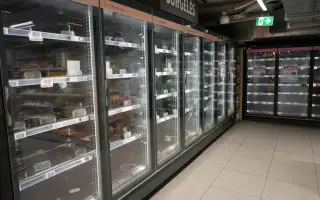
The Pentagon investigated suspected cyberattack on six military freezers at bases in August.[1][2][3]
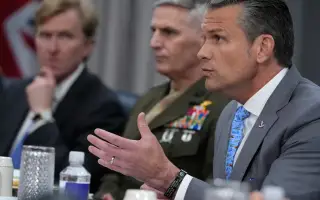
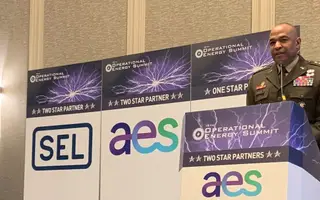
Assistant Secretary Dale Marks spoke at a convention in Tampa. He said new bases will run on own power for 30 days.[1][2][3]
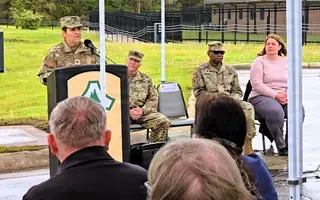
The Army gave Canoochee EMC $54.8M to build a microgrid at Fort Stewart in Georgia.[1][2][3]
Antares signed a fuel deal with BWXT for its Army microreactors at Fort Bragg in 2028.[1][2][3]
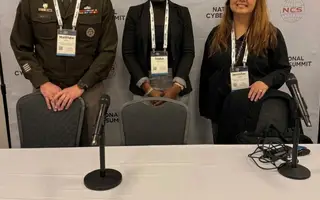
The US Army unveiled Project IRMA at the 2026 National Cyber Summit. It gave a proof of concept tool at Fort Huachuca.[1]
The Pentagon told bases to plan for 90 days without the grid.[1][2][3]
USACE gave 2.49 billion dollars to its own power and other work at bases around the world.[1]
The US Navy selected Radiant to power its base at Naval Weapons Station Crane with a 1-MW microreactor.[1][2][3]
The Pentagon started with energy for its FORTRESS America project. It began assessments of 500 bases to find the cost.[1][2][3]
The US Army gave a solar deal to Center Line. They put small rooftop solar arrays on Detroit Arsenal buildings for $347000.[1]
The U. S.[1]
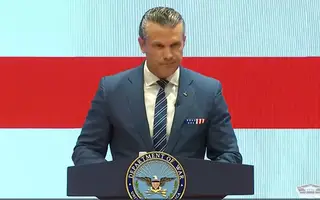
Hegseth gave a memo at Quantico. He set up the FORTRESS America program with five parts.[1][2][3]
Ohio Air National Guard gave Big Shine Worldwide 8.21 million dollars at Springfield base to build a microgrid system.[1][2]
USACE New York opened bids for a microgrid at JBMDL. PKF-Mark III gave the low bid of $11.35M.[1][2][3]
USACE gave J and J Contractors $131. 9M to build a microgrid at Cape Cod Space Force Station.[1]
The Army Corps of Engineers gave Quanta a $67.9M deal for a microgrid at Rock Island Arsenal.[1][2][3]
The Army gave Ameresco a $51.6M deal for a power microgrid at Anniston Depot.[1]
The US Army will host three 1-MW Radiant microreactors at Fort Benning under Janus.[1]
The Army National Guard gave money to make microgrids at bases. They gave 14.7 million dollars to speed up the work.[1]
German police investigated a sabotage attack on the Brandenburg power grid near a power plant in Germany.[1][2][3]
The Pentagon picked Fort Campbell to get a 20 MW nuclear power plant. They will build it on 5 acres there.[1][2][3]
The US Army picked 5 companies to make microreactors at bases. The Army gave contracts for its nuclear program.[1][2][3]
Jon Wellinghoff warned the Pentagon that 9 targeted substations could cause an 18 month nationwide blackout.[1][2][3]
The Army selected five vendors for five sites in the Janus program. The Army expects at least one reactor to operate by 2028.[1][2][3]
The Pentagon gave fuel to Radiant for its nuclear reactor at a US military base.[1]
The Department of the Army gave $17. 7M to Parsons Government Services Inc.[1]
The Air Force gave 1.2 million dollars to Influit Energy LLC at an Air Force base for a flow battery to give its own power.[1]
The Department of the Army gave $2. 2M to Michael Baker Stanley Joint Venture at Hunter Army Airfield for a microgrid.[1]
The Department of the Air Force gave $1. 2M to Nano Nuclear Energy Inc at an Air Force base.[1]
The Department of the Army gave $3. 4M to The Mason & Hanger Group Inc.[1]
The Air Force gave $7.5M to Concurrent Technologies Corp at Kirtland Air Force Base for a direct current microgrid.[1]
The Army gave 3.9 million dollars to Benham Design LLC for a microgrid at Rock Island Arsenal.[1]
The Department of the Air Force gave $1. 2M to Accelerate Wind Inc at Air Force bases.[1]
The Navy gave 1.0M dollars to WSP USA INC in Guam. They gave it for post construction award services for the energy upgrades.[1]
The Army gave $25.1M to City Light and Power for a microgrid at Fort Riley.[1]
The Department of the Army gave $1. 1M to Dragos Inc at its own power for cybersecurity.[1]
The Department of the Navy gave $26. 1M to Duke Energy Progress.[1]
The Army gave $16.4M to Dominion Privatization Texas in Texas for a microgrid at Fort Cavazos.[1]
The Army gave $19.5M to Ameresco. They did this to build a microgrid at Fort Campbell.[1]
The Navy gave 1.4 million dollars to AECOM Smithgroup at Camp Pendleton for a medical upgrade.[1]
The Air Force gave $5. 1M to The Research Foundation for the State University of New York.[1]
The U. S.[1][2]
The Department of the Army gave 54.3 million dollars to David Boland Incorporated. They did this to build a 10 megawatt power plant with microgrid controls at an Army base.[1]
The Army gave 19.5 million dollars to RQ-LORD JV at Ramey for a microgrid project.[1]
The Army gave 10.6 million dollars to AICI ARCHIRODON JV LLC at Camp Arifjan for a microgrid.[1]
The Army gave 15.9 million dollars to Sandhills Utility Services at Camp Mackall for a microgrid.[1]
The Department of the Navy gave $20. 7M to Dominion Energy South Carolina Inc.[1]
The Department of the Navy gave $29. 4M to Absher Construction Co at an existing base.[1]
The Department of the Army gave $6. 9M to Design Alaska Inc in Alaska for the Eie490 Microreactor Synchronization project.[1]
The Army gave Fesco Energy 14.8 million dollars at a base to build a microgrid that uses its own power and is EMP hardened.[1]
The Air Force paired Radiant with Buckley Space Force Base, Westinghouse with Malmstrom Air Force Base, and Antares with Joint Base San Antonio. They aim for one reactor by 2030.[1]
The Department of the Navy gave $14. 9M to CO.[1]
Idaho National Laboratory researchers built the first microreactor control system in decades at their lab.[1]
The Department of the Army gave $8. 6M to Tetra Tech Mason and Hanger Joint Venture at Parks Reserve Forces Training Area.[1]
Trump directed the War Dept to seek coal PPAs for bases for grid reliability and fuel security.[1][2]
USACE finished a project at Fort Bliss. It will save 130 million dollars over the contract length.[1]
The Air Force gave 9 million dollars to The Global Connective Center LLC at an Air Force base. They gave it for a solar hydrogen microgrid test.[1]
The Navy gave Trane 8.1 million dollars at Naval Air Station Oceana for an energy savings deal with lights and solar power.[1]
The House gave the yearly defense bill section 315 for a transportable nuclear power unit of 50 MW or less in the Indo Pacific area by 2030.[1][2]
The UK MoD deployed six off-grid solar hydrogen battery microgrids at Royal Air Force bases.[1]
The Navy built a solar plus battery microgrid at NAS Sigonella. It is the first of its kind in that Navy area and holds 20 MW.[1]
The House Armed Services Committee gave the yearly defense bill with base energy rules.[1]
The Pentagon asked for 694.3 million dollars in its base energy fund for construction at Redstone, Kitsap, Camp Roberts, and F E Warren. The yearly defense bill authorized base energy fund projects at Redstone Arsenal, Camp Roberts, and Eglin Air Force Base.[1][2]
The Pentagon gave a 26.95 million dollar microgrid to White Sands Missile Range. They used its own power to do it there.[1]
The Department of the Army gave $6. 9M to Burns and McDonnell.[1]
Congress passed the yearly defense bill. It gave rules for grid planning and changed the resilience definition for Pentagon base energy fund projects at bases.[1]
The Army base in Germany made its own power stronger. It got ready for 3 projects that cost $12M total.[1]
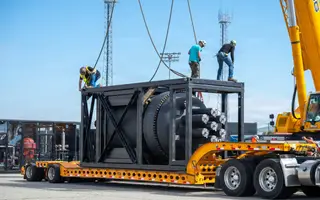
Idaho National Lab got the first batch of TRISO fuel for the Pentagon's Project Pele microreactor at its test site. BWXT gave the full core of fuel to the lab for tests as early as 2027.[1][2][3]
The Army gave $28.6M to City Light and Power Aberdeen LLC at Aberdeen Proving Ground for a microgrid and backup power.[1]
The Army started the Janus Program for new nuclear power with the Pentagon innovation unit at its own bases.[1]
The Department of the Navy gave $5. 7M to Serrano Construction and Development Corp.[1]
The Air Force gave Oklo its own power test at Eielson Air Force Base. They asked for 5 MW plus steam.[1]
The Army gave $9.7M to TEKSOL INTEGRATION GROUP INC at Puerto Nuevo Puerto Rico for the Pentagon's base energy fund project.[1]
The US Army gave $33.5M to City Light and Power JBLM LLC at JBLM. They asked for a microgrid system there.[1]
The Army Corps of Engineers asked for bids for a 10 MW microgrid at Fort Stewart.[1]
Radiant signed a deal to supply a microreactor for a US military base.[1]
The Navy asked for reactor sites on seven bases in VA MD NC.[1]
The Army gave $5.1M to Tetra Tech and Mason & Hanger joint venture at JBLM for a microgrid project.[1]
The Army gave 6.6 million dollars to Bath Group LLC. They asked for a microgrid at Dugway Proving Ground in Utah.[1]
The Army gave $22.0M to Ameresco. They built a microgrid at Fort Hunter Liggett to give power when the main grid fails.[1]
The Air Force picked Oklo to give power to Eielson Air Force Base. They will give up to 5 MW under a 30 year deal.[1][2]
The White House gave rules for the Army to run a nuclear reactor at a base by Sept 30 2028.[1]
The Army gave Booz Allen Hamilton $7. 2M at its own power.[1]
The Pentagon named 8 companies for nuclear power at bases. The companies are Antares, BWXT, GA, Kairos, Oklo, Radiant, Westinghouse, and X-energy.[1][2]
The Navy gave a 97 million dollar deal to a company for a battery storage microgrid at the Guam submarine base. The Polaris Point microgrid will finish by June 2028.[1]
The Department of the Navy gave $97. 0M to Granite-Obayashi 2 joint venture at Joint Region Marianas.[1]
The Navy gave 27.0 million dollars to Insight Pacific in Hawaii to replace power lines at a base annex.[1]
The White House ordered DoD to do a 60 day assessment of its ability to get energy and fuel for homeland defense.[1]
The Pentagon gave 146.8 million dollars to a microgrid at MCAS Iwakuni.[1]
The US Navy asked for contractor owned energy prototypes at bases. They want microreactors with 99.[1]
Congress extended the black start test rules through 2032.[1]
The Pentagon told bases to make energy plans. They must focus on on site power and storage and tough microgrids.[1]
California gave $42 million to a battery project at Camp Pendleton.[1]
The Army gave 10.6 million dollars to HSGS-AMERESCO LLC for a microgrid at White Sands Missile Range.[1]
The US Army commissioned an all renewable microgrid at Fort Hunter Liggett.[1]
The Army set up its own power microgrid at Camp Arifjan.[1]
The US Army gave a 6 MW 6 MWh battery at Fort Detrick. It took a step toward a microgrid.[1]
The Army and DIU asked for 3 to 10 MW micro reactors at bases by 2030.[1]
The Pentagon added three new geothermal companies to bases. Fervo gave power to NAS Fallon.[1]
The Army completed a microgrid at West Fort Cavazos.[1]
The US government took down Volt Typhoon botnet routers in the US. They used its own power to hide hacks on key systems.[1]
The US Army tested its own power at Fort Moore. They shut down the main power feed for the test.[1]
Hill Air Force Base cut commercial power for 10 hours at its own base.[1]
The US Army asked for nuclear microreactors at its bases. It wants reliable on site power.[1]
The Energy Department picked a 39.9 million dollar Navy microgrid at Pearl Harbor Hickam.[1]
The Pentagon gave its base energy fund list for 2025. It includes Anniston microgrid and Portsmouth NSY power plant resiliency.[1]
Congress widened resilience prototypes to hydrogen and other tech in the yearly defense bill.[1]
The Department of the Navy gave $41. 1M to Concurrent Technologies Corp at its own power for energy resilience and reliability support.[1]
The Secretary of the Navy made the DON Installation Campaign Plan for Environmental Resilience and Energy Readiness.[1]
The CE team at Maxwell AFB and Gunter cut commercial power for an ERRE test.[1]
The US Air Force picked Redflow batteries for a test at an air force base.[1]
DIU picked Eavor at JBSA, Teverra at Fort Wainwright, and Zanskar at Mountain Home and Fort Irwin to advance geothermal energy.[1]
Microsoft exposed Chinese Volt Typhoon hackers. They hit US bases on Guam with living off the land techniques.[1][2][3]
The Army tested its own power at Fort Drum. They did a black start test.[1]
The Department of the Navy gave $12. 8M to Pacific Rim Constructors Inc.[1]
The Army expanded microgrid and storage investments at its bases.[1]
The Pentagon asked for bids to build a microgrid at Fort Bragg JSOC. It will power critical loads for 14 days.[1]
The House Armed Services Committee created the Energy Resilience Testbed program and installation energy plans in the FY2023 NDAA bill summary.[1]
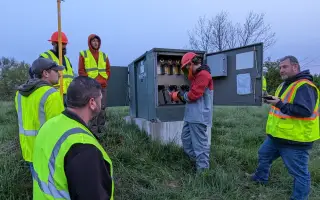
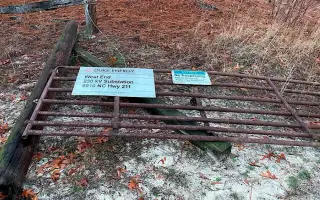
Unknown people attacked two substations in Moore County. They cut power for 45000 homes.[1][2][3]
FERC told power companies to review substation security after the Moore County attack.[1]
The Marine Corps Base Camp Lejeune chose Duke Energy to build a $22 million military microgrid.[1]
The Pentagon gave Joint Base McGuire-Dix-Lakehurst a microgrid as part of a $140 million energy project.[1]
DoD decided to build and test the Pele prototype at INL.[1][2]
The US Air Force led the first regional ERRE across Schriever Buckley and Peterson. The Pentagon reached 10 ERREs since FY2020.[1]
The Pentagon started new no notice blackout drills. The Navy plans three black starts in 2022.[1]
The House Armed Services Committee required a microgrid assessment in new construction and a long duration storage demo.[1]
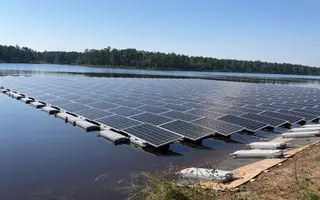
The US Army built a 1. 1 MW floating solar array with a 2 MWh battery at Fort Bragg's Camp Mackall for outage backup.[1]
The US Army gave Fort Knox its own power for a full workday in the first installation wide black start test.[1]
The Air Force picked Eielson AFB as the site for a commercially owned micro reactor pilot.[1]
The US Air Force signed its first Energy Assurance Lease at Tyndall AFB. The lease gave a utility owned solar plus battery microgrid that can island three mission critical facilities.[1]
The Department of the Navy gave Schneider Electric USA Black and Veatch JV $20. 3M at MCAS Miramar for a microgrid.[1]
The US Air Force released its Installation Energy Strategic Plan. The plan treats a 30 day EMP GMD grid outage as a planning scenario.[1]
The Marine Corps asked for a design build microgrid to island MCAS Camp Pendleton from SDG&E.[1]
The House Armed Services reinforced 99. 9 percent critical load availability with an emergency generator microgrid pilot and on site energy projects at bases.[1]
The Army tested energy resilience on its posts. It used a 14 day benchmark and black start testing.[1]
The Marine Corps powered MCAS Miramar on its microgrid. It islanded from SDG&E and ran the whole air station.[1]
The Pentagon gave contracts to BWXT, Westinghouse and X-energy for a mobile microreactor design.[1]
The Department of the Army gave $8. 8M to Raytheon Company at its own base for a hybrid microgrid test with high penetration wind.[1]
The US Army told its bases to sustain critical missions for 14 days of energy and water.[1]
The Senate Armed Services Committee directed black start tests at major bases and boosted energy resilience programs.[1]
AES gave the Navy a 19. 3 MW solar setup and 70 MWh battery at PMRF.[1]
OSD ran four black start tests. Air Force had 240 outages in FY2018.[1]
DOE gave support to Project Pele at its own power in Phase 1 design.[1]
OSD SCO asked for two phase mobile microreactor design build. They gave up to $45M per Phase I agreement.[1]
DoD directed a pilot test to harden one military base against EMP.[1]
The Air Force added a solar array at Hill AFB to cut reliance on outside power.[1]
The Pentagon gave its FY2020 ERCIP list. It included cogeneration at Fort Leonard Wood.[1]
The Pentagon gave Otis ANGB a wind plus battery microgrid that can island and carry the full base load for up to five days.[1]
The Department of the Army gave $9. 8M to ReadyOne Industries Inc at its own base for Force Provider Ammps Microgrid Kits.[1]
The Air Force gave a $143 million energy savings deal at Joint Base San Antonio. It includes microgrid controls for critical loads.[1]
Congress passed the FY2019 NDAA. It required 99.[1]
The Army completed a 50 MW power plant with HECO at Schofield.[1]
Congress created 10 USC 2911 resilience rules and definitions. Energy savings may fund resilience and it counts in utility contracts.[1]
The US Army set a 14 day minimum to sustain critical missions through utility outages.[1]
Schneider Electric gave MCLB Albany controls to island on landfill gas CHP plus 8. 5 MW biomass steam generation.[1]
The Pentagon changed its rules to require energy projects to meet resilience needs in planning and budgeting.[1]
The utility gave MCAS Yuma a 25 MW plant for base wide backup power.[1]