Key developments first.
Reading
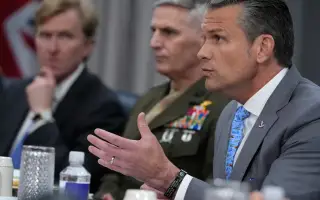
Assistant Secretary Dale Marks spoke at a convention in Tampa. He said new bases will run on own power for 30 days.[1][2][3]
The Pentagon told bases to plan for 90 days without the grid.[1][2][3]
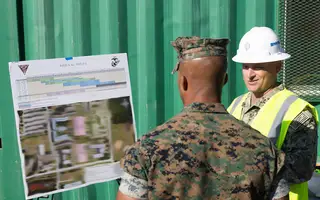
The Pentagon started with energy for its FORTRESS America project. It began assessments of 500 bases to find the cost.[1][2][3]
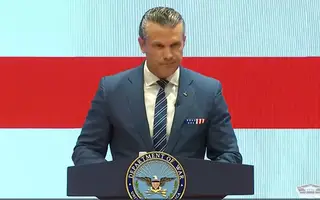
Hegseth gave a memo at Quantico. He set up the FORTRESS America program with five parts.[1][2][3]
Congress passed the yearly defense bill. It gave rules for grid planning and changed the resilience definition for Pentagon base energy fund projects at bases.[1]
Congress widened resilience prototypes to hydrogen and other tech in the yearly defense bill.[1]
The US Air Force released its Installation Energy Strategic Plan. The plan treats a 30 day EMP GMD grid outage as a planning scenario.[1]
The House Armed Services reinforced 99. 9 percent critical load availability with an emergency generator microgrid pilot and on site energy projects at bases.[1]
The US Army told its bases to sustain critical missions for 14 days of energy and water.[1]
Congress passed the FY2019 NDAA. It required 99.[1]
Congress created 10 USC 2911 resilience rules and definitions. Energy savings may fund resilience and it counts in utility contracts.[1]
The US Army set a 14 day minimum to sustain critical missions through utility outages.[1]
The Pentagon changed its rules to require energy projects to meet resilience needs in planning and budgeting.[1]