Key developments first.
Reading
The Pentagon gave Joint Base McGuire-Dix-Lakehurst a microgrid as part of a $140 million energy project.[1]
DoD decided to build and test the Pele prototype at INL.[1][2]
The U. S.[1]
The US Air Force led the first regional ERRE across Schriever Buckley and Peterson. The Pentagon reached 10 ERREs since FY2020.[1]
The Pentagon started new no notice blackout drills. The Navy plans three black starts in 2022.[1]
The House Armed Services Committee required a microgrid assessment in new construction and a long duration storage demo.[1]
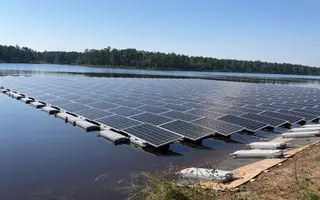
The US Army built a 1. 1 MW floating solar array with a 2 MWh battery at Fort Bragg's Camp Mackall for outage backup.[1]
The US Army gave Fort Knox its own power for a full workday in the first installation wide black start test.[1]
The Air Force picked Eielson AFB as the site for a commercially owned micro reactor pilot.[1]
The US Air Force signed its first Energy Assurance Lease at Tyndall AFB. The lease gave a utility owned solar plus battery microgrid that can island three mission critical facilities.[1]
The Department of the Navy gave Schneider Electric USA Black and Veatch JV $20. 3M at MCAS Miramar for a microgrid.[1]
The US Air Force released its Installation Energy Strategic Plan. The plan treats a 30 day EMP GMD grid outage as a planning scenario.[1]
The Marine Corps asked for a design build microgrid to island MCAS Camp Pendleton from SDG&E.[1]
The House Armed Services reinforced 99. 9 percent critical load availability with an emergency generator microgrid pilot and on site energy projects at bases.[1]
The Army tested energy resilience on its posts. It used a 14 day benchmark and black start testing.[1]
The Marine Corps powered MCAS Miramar on its microgrid. It islanded from SDG&E and ran the whole air station.[1]
The Pentagon gave contracts to BWXT, Westinghouse and X-energy for a mobile microreactor design.[1]
The Department of the Army gave $8. 8M to Raytheon Company at its own base for a hybrid microgrid test with high penetration wind.[1]
The US Army told its bases to sustain critical missions for 14 days of energy and water.[1]
The Senate Armed Services Committee directed black start tests at major bases and boosted energy resilience programs.[1]
AES gave the Navy a 19. 3 MW solar setup and 70 MWh battery at PMRF.[1]
OSD ran four black start tests. Air Force had 240 outages in FY2018.[1]
DOE gave support to Project Pele at its own power in Phase 1 design.[1]
OSD SCO asked for two phase mobile microreactor design build. They gave up to $45M per Phase I agreement.[1]