Key developments first.
Reading
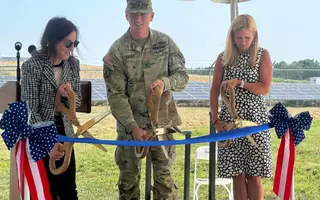
The US Army gave a 6 MW 6 MWh battery at Fort Detrick. It took a step toward a microgrid.[1]
The Army and DIU asked for 3 to 10 MW micro reactors at bases by 2030.[1]
The Pentagon added three new geothermal companies to bases. Fervo gave power to NAS Fallon.[1]
The Army completed a microgrid at West Fort Cavazos.[1]
The US government took down Volt Typhoon botnet routers in the US. They used its own power to hide hacks on key systems.[1]
The US Army tested its own power at Fort Moore. They shut down the main power feed for the test.[1]
Hill Air Force Base cut commercial power for 10 hours at its own base.[1]
The US Army asked for nuclear microreactors at its bases. It wants reliable on site power.[1]
The Energy Department picked a 39.9 million dollar Navy microgrid at Pearl Harbor Hickam.[1]
The Pentagon gave its base energy fund list for 2025. It includes Anniston microgrid and Portsmouth NSY power plant resiliency.[1]
Congress widened resilience prototypes to hydrogen and other tech in the yearly defense bill.[1]
The Department of the Navy gave $41. 1M to Concurrent Technologies Corp at its own power for energy resilience and reliability support.[1]
The Secretary of the Navy made the DON Installation Campaign Plan for Environmental Resilience and Energy Readiness.[1]
The CE team at Maxwell AFB and Gunter cut commercial power for an ERRE test.[1]
The US Air Force picked Redflow batteries for a test at an air force base.[1]
DIU picked Eavor at JBSA, Teverra at Fort Wainwright, and Zanskar at Mountain Home and Fort Irwin to advance geothermal energy.[1]
Microsoft exposed Chinese Volt Typhoon hackers. They hit US bases on Guam with living off the land techniques.[1][2][3]
The Army tested its own power at Fort Drum. They did a black start test.[1]
The Department of the Navy gave $12. 8M to Pacific Rim Constructors Inc.[1]
The Army expanded microgrid and storage investments at its bases.[1]
The Pentagon asked for bids to build a microgrid at Fort Bragg JSOC. It will power critical loads for 14 days.[1]
The House Armed Services Committee created the Energy Resilience Testbed program and installation energy plans in the FY2023 NDAA bill summary.[1]
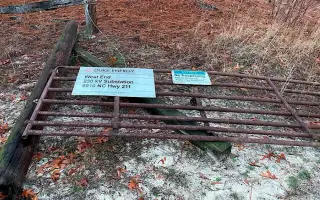
Unknown people attacked two substations in Moore County. They cut power for 45000 homes.[1][2][3]
FERC told power companies to review substation security after the Moore County attack.[1]
The Marine Corps Base Camp Lejeune chose Duke Energy to build a $22 million military microgrid.[1]